
"coffee growing climate"
10000 article(s) found

Climate change affects coffee production. 25 million coffee farmers' livelihoods are threatened.
Extreme weather events and rising temperatures have a great impact on global coffee production. It is predicted that by 2050, the land suitable for Arabica coffee will be reduced by as much as 50%. Traditional coffee-growing areas, such as Vietnam, India and Central America, will be particularly hard hit. John Connor, chief executive of the Australian Climate Research Institute, said in a statement

Climate change affects coffee production. 25 million coffee farmers' livelihoods are threatened.
Extreme weather events and rising temperatures have a great impact on global coffee production. It is predicted that by 2050, the land suitable for Arabica coffee will be reduced by as much as 50%. Traditional coffee-growing areas, such as Vietnam, India and Central America, will be particularly hard hit. John Connor, chief executive of the Australian Climate Research Institute, said in a statement

Climate change affects coffee production. 25 million coffee farmers' livelihoods are threatened.
Extreme weather events and rising temperatures have a great impact on global coffee production. It is predicted that by 2050, the land suitable for Arabica coffee will be reduced by as much as 50%. Traditional coffee-growing areas, such as Vietnam, India and Central America, will be particularly hard hit. John Connor, chief executive of the Australian Climate Research Institute, said in a statement

The environment of growing coffee beans the growing conditions of fine coffee in Colombia
The suitable climate in Colombia provides a real natural pasture for coffee. Coffee trees in Colombia are mainly cultivated in the Andes, on steep slopes about 1300 meters above sea level, where the annual temperature is about 18 degrees Celsius, annual rainfall is 2000 to 3000 millimeters, latitude 1-11 15 north, longitude 72-78 west, and the specific range of elevation can exceed 2.000 meters. By

A brief introduction to the planting situation, geographical location, climate and altitude of mellow and full-bodied coffee beans
Alishan Mafeel is planted in the Alishan Mountains, and the Alishan Mountains are uniquely located in the global coffee belt. Because of the high altitude and the temperature difference of more than 10 degrees between day and night, the coffee beans produced are of the best quality, with full grains, thick pulp, sweet and mellow taste, sweet, non-astringent, not bitter, not sour, and perfectly showing the taste of coffee.

Sweet, not astringent, not bitter, not sour Mafei fine coffee beans cultivation geographical location climate sea
Alishan coffee is the most special and superior coffee in Taiwan, and the yield is small, and the rare is expensive. Alishan Mountain, located 75 kilometers east of Chiayi City, Taiwan, is located at an altitude of more than 2000 meters. It is adjacent to Yushan Mountain Range and Yushan National Park in the east. It is surrounded by high mountains and has a cool climate. The average temperature is 10.6 degrees Celsius, the average summer temperature is 14.3 degrees Celsius, and the average winter temperature is 6.4 degrees Celsius. drink

A brief introduction to the treatment method of grinding degree and baking degree of Columbia exquisite boutique coffee beans
Origin: Nalinglong altitude: 1860 m-2220 m processing: washing harvest time: April-June (75%), October-February (25%) varieties: new Kaddura species, Castie baking degree: CITY+ flavor characteristics: roasted almonds, lemon and orange, white chocolate, honey, peach, round body, long aftertaste, balanced Colombian suitable climate provides one for coffee.

Guatemala Picotenango Highland Coffee Production Area with Dry Climate but Abundant Water
Vivit South Fruit Production Area is located in the northwest highlands of Guatemala. It is planted at an altitude of 1800-2100 meters. It is the highest coffee production area in the country and is famous for producing excellent quality beans. Due to the large number of rivers and lakes in Guatemala, the Vivitenango region is rich in mountains and water resources, the climate is dry but the water supply is abundant, and the water conservancy facilities in the region are complete, so coffee is mostly washed and added.

A brief introduction to the Origin, Development, History and Culture of Columbia's exquisite Coffee beans
The suitable climate in Colombia provides a real natural pasture for coffee. Coffee trees in Colombia are mainly cultivated in the Andes, on steep slopes about 1300 meters above sea level, where the annual temperature is about 18 degrees Celsius, annual rainfall is 2000 to 3000 millimeters, latitude 1-11 15 north, longitude 72-78 west, and the specific range of elevation can exceed 2.000 meters. By

Introduction to Rwanda washed bourbon coffee
Follow the comment (Wechat official account vdailycom) found that the beautiful cafe opened its own shop, Rwanda Water washed bourbon Coffee, known as the country of a thousand hills, the whole territory is mountainous and plateau, most of the area is tropical plateau climate and savanna climate, mild and cool. There are about 33000 hectares of coffee plantations and 500000 people are engaged in the coffee industry. With high altitude and fertile fire

Planting coffee trees requires the weather, climate and soil quality of the province.
1. Arabica coffee is not resistant to high temperature and humid climate, nor can it stay at a low temperature below 5 ℃ for a long time, so it is mostly planted on steep slopes at elevations of 1000 to 2000 meters above sea level. On the other hand, Robusta caffeine is adaptable (Robusta means tenacious) and is mostly grown in lowlands below 1000 meters above sea level. The average rainfall for the whole year is in
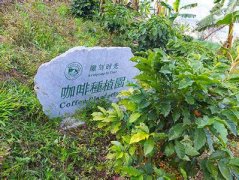
A brief introduction to the origin, development, history and culture of Columbia's exquisite boutique coffee beans.
The suitable climate in Colombia provides a real natural pasture for coffee. Coffee trees in Colombia are mainly cultivated in the Andes, on steep slopes about 1300 meters above sea level, where the annual temperature is about 18 degrees Celsius, annual rainfall is 2000 to 3000 millimeters, latitude 1-11 15 north, longitude 72-78 west, and the specific range of elevation can exceed 2.000 meters. By

A brief introduction to the origin, development, history and culture of Columbia's exquisite boutique coffee beans.
The suitable climate in Colombia provides a real natural pasture for coffee. Coffee trees in Colombia are mainly cultivated in the Andes, on steep slopes about 1300 meters above sea level, where the annual temperature is about 18 degrees Celsius, annual rainfall is 2000 to 3000 millimeters, latitude 1-11 15 north, longitude 72-78 west, and the specific range of elevation can exceed 2.000 meters. By

How does Starbucks Rwandan coffee taste?
Pay attention to the coffee review (Weixin Official Accounts vdailycom ) and find a good cafe to open its own small shop Starbucks Rwanda coffee for $24 per pound. Starbucks Rwanda coffee is basically one type of coffee bean. The taste of Rwandan coffee is described as grassy, with tropical climate characteristics. In addition to the fruity sweetness of this coffee, it can also taste refreshing,

The cultivation of boutique coffee beans at La Tisa Manor in Guatemala, geographical location, climatic sea
Because it is planted in the hills of volcanoes, it can retain its own characteristics more than Costa Rica, the main reason is that it has more geographical and climatic advantages than Costa Rica. Guatemala is located in the tropics, but due to the relatively high altitude, the climate is mild, it is a subtropical climate. Under the influence of this climate, coffee trees blossom and bear fruit more than any other place in the world.

Price of Kona Coffee beans in Hawaii introduction to the taste treatment method of flavor description in manor production
The quality of the fine Kona coffee is suitable for the right geographical location and climate. Coffee trees grow on the slopes of volcanoes, and their geographical location ensures the altitude needed for coffee to grow; the dark volcanic ash soil provides the necessary minerals for coffee. This is probably due to the fact that Kona Island is rich in volcanic black mud with moderate acidity, rich mineral content and suitable water content. Parallel

A brief introduction to the history and culture of the origin and development of Rwanda's fine coffee beans with full grains
Coffee production in Rwanda: there are about 33000 hectares of coffee plantations in Rwanda and 500000 people are engaged in coffee cultivation. With the good natural conditions of high altitude and fertile volcanic soil, the country's fertile soil and suitable climate contribute to plant growth, and coffee trees seem to be driven or forced to grow upward, or because they grow too fast to produce the best coffee beans.

Xizang's coffee, are you looking forward to it?
Xizang can grow not only highland barley potatoes. As early as two years ago, various tropical fruits such as banana, lemon, pomelo, papaya, sugarcane, mango, citrus and jackfruit were successfully grown in Motuo County, Linzhi City, Xishuangbanna. Growing coffee in Linzhi corner under the same climatic conditions may become a reality in the near future. The first trial of coffee has been completed.
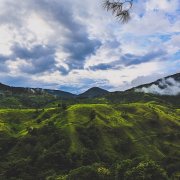
Coffee crisis, mankind's favorite drink is about to go into history.
Droughts, floods, infectious diseases and climate changes have posed a great threat to human coffee addiction. Do we really have to face the days when there is no coffee? When we read the newspaper and pick up the latte or espresso on the table, climate change seems far away, but thousands of kilometers away, the origin of coffee beans is experiencing waves. Mersey.

Hierarchical and full Columbia exquisite boutique coffee bean flavor, taste and aroma description, Jane
Origin: na Linglong altitude: 1860 m-2220 m processing: washing harvest time: April-June (75%), October-February (25%) varieties: new Kaddura species, Castie baking degree: CITY+ flavor features: roasted almonds, lemon and orange, white chocolate, honey, peach, round body, long aftertaste, balanced annual rainfall of 2000 to 3000 mm, north latitude 1